
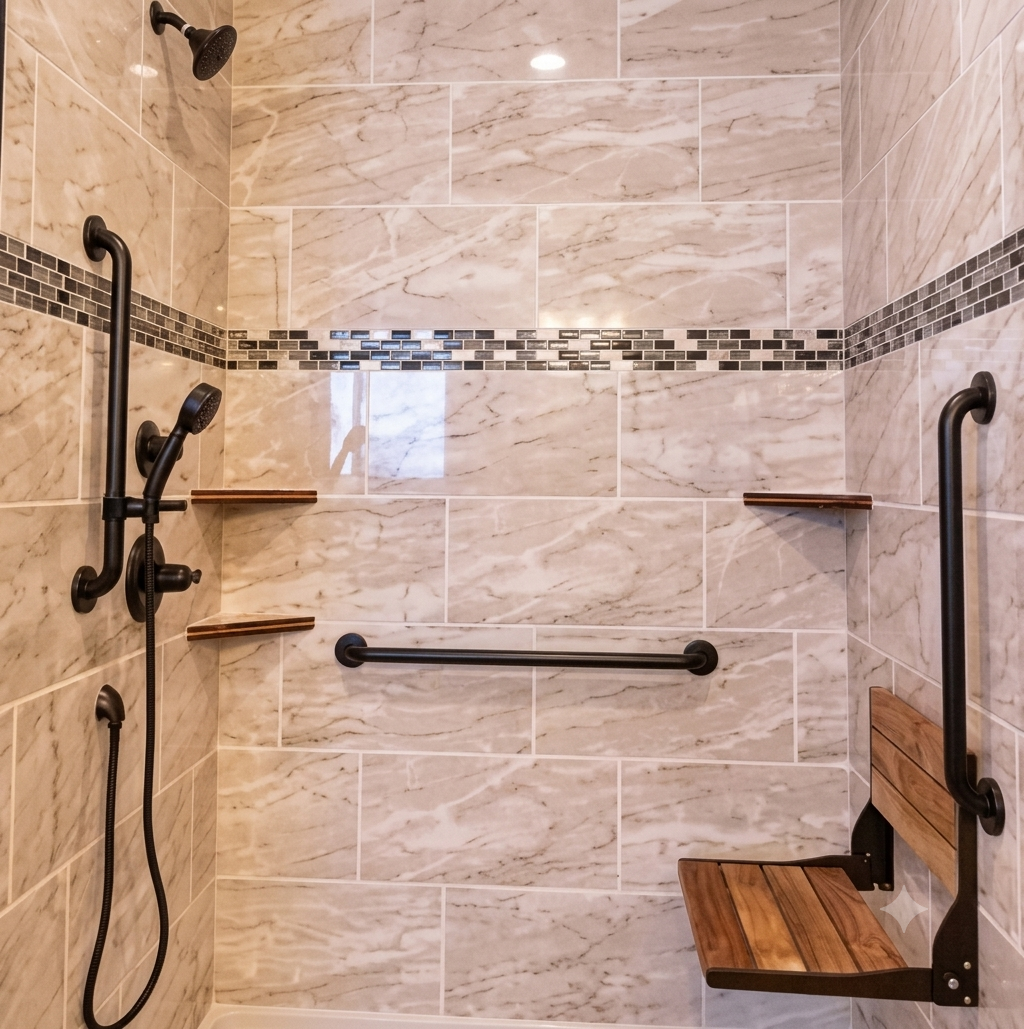

ADA figures exist because they're the range that keeps a bar reachable and load-safe for the widest range of people. We check every install against them — here's what they mean and how they apply to a home bathroom.
Tap a spec to see why it's set where it is.
Measured from the finished floor to the top of the gripping surface — the range that keeps a bar reachable whether pushing up or steadying while standing.
Thin enough to close a full hand around, thick enough not to flex under load — the range most adult hands grip most securely.
Space kept between the bar and the wall so fingers wrap fully around without scraping knuckles.
The baseline force a properly stud-anchored bar must withstand — most of our hardware is rated well above this floor.
Every job, automatically -- measuring against these figures is part of our standard install process, not an add-on.
We get as close as the wall framing allows and explain any tradeoff -- safety and honesty come before a textbook-perfect number.
Rarely -- most homes built before accessibility codes existed have grab bars, if any, installed off-spec or into drywall alone.
Most bathrooms benefit from at least three -- shower entry, tub edge, and beside the toilet. A 24″ bar is usually the right length for shower and tub placements, anchored into studs that typically sit 16″ on center.
We measure before we drill, every time.